When the Server Room Makes the Rules: Diagnosing Legacy Lock-In
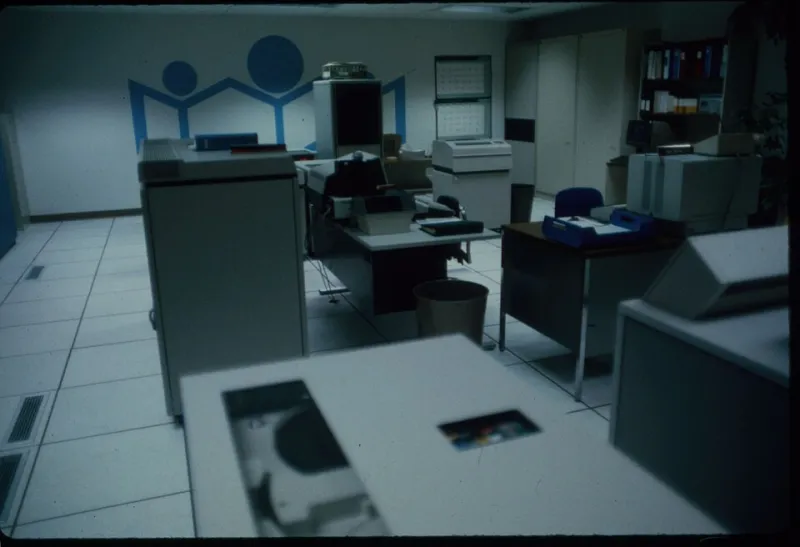
Photo: Columbus Metropolitan Library, No restrictions, via Wikimedia Commons
Nobody hands the keys to the legacy systems. It happens gradually: a mainframe application becomes load-bearing, a custom integration becomes unreplaceable, and one day the organization's most consequential decisions are being made — informally, invisibly — by technology that predates the smartphone. Leadership believes it is setting direction. In truth, the architecture is.
For mid-sized US enterprises in particular, the pattern is common enough to deserve a checklist. Here are five signs your infrastructure is running the company, along with the diagnostic question each one raises and a realistic place to begin.
1. Your Product Roadmap Contains the Phrase "Because of the System"
When teams explain feature delays or product limitations, listen for the tell: "the platform doesn't support that," or "we'd have to rebuild the integration first." When constraints from a legacy system routinely override market demands in roadmap discussions, the technology agenda has replaced the customer agenda.
Diagnostic question: In the last two quarters, how many roadmap decisions were justified primarily by system limitations rather than customer or competitive rationale?
Starting point: Don't attempt a rewrite. Instead, build a constraint ledger — a running document of every decision a legacy system blocked, with the estimated revenue or cost impact. Quantified constraints are the only currency that reliably funds modernization.
2. Hiring Is Shaped by What the Stack Can Survive
When job descriptions emphasize experience with a specific aging platform; when the highest-paid engineers are the ones who understand the undocumented twenty-year-old billing system; when retention strategy is essentially "keep the two people who know how this works" — the org design is following the architecture.
Diagnostic question: If your three most system-critical employees resigned tomorrow, what would the business be unable to do?
Starting point: Before any technical migration, fund knowledge capture. Documented, testable understanding of legacy systems reduces both operational risk and the hostage dynamics that stall modernization budgets.
3. Every Integration Is a Negotiation
In healthy architectures, connecting systems is routine. In legacy-dominated ones, every new tool requires custom middleware, compromise, or outright abandonment. When the answer to "can we connect this?" is usually "it's complicated," integration friction has become a de facto veto over new capabilities — including the AI and analytics tools the market now expects.
Diagnostic question: What percentage of new tool evaluations end in "no" specifically because of integration difficulty?
Starting point: Invest in an integration layer — an API gateway or middleware platform — rather than point-to-point patches. It's unglamorous, but it converts every future decision from "can we connect?" to "how quickly?"
4. Maintenance Budgets Crowd Out Ambition Budgets
A useful ratio: compare spend on keeping existing systems alive against spend on changing what those systems do. When 80% of the IT budget is consumed by "run" costs — licenses for discontinued products, hardware past end-of-life, contractors maintaining code no one owns — there is no discretionary capacity left to pursue strategy. The budget has become a tribute payment to the past.
Diagnostic question: What share of last year's technology spend produced new capability versus merely preserving existing capability?
Starting point: Freeze net-new customization on legacy platforms now. Every new bolt-on raises the eventual migration cost. A freeze costs nothing and stops the bleeding immediately.
5. Risk Assessments Assume the Systems Will Hold
Perhaps the most dangerous sign is the quiet one: business continuity plans, compliance audits, and insurance questionnaires that treat legacy infrastructure as a given rather than a liability. An unpatchable system supporting revenue-critical operations is not an IT detail. It is an enterprise risk sitting unmodeled on the balance sheet.
Diagnostic question: If a core legacy system failed irrecoverably during peak season, what is the documented recovery plan — and when was it last tested?
Starting point: Commission a formal technical debt risk assessment that speaks the language of the board: exposure, likelihood, and dollar impact. Modernization proposals framed as engineering projects stall; framed as risk mitigation, they move.
The Common Thread
Across all five signs, the pattern is identical: decisions that should be made by strategy are instead made by constraint. Legacy systems rarely issue demands — they simply make certain futures expensive, and organizations rationally drift toward the cheap ones.
Reversing that drift doesn't begin with a migration project. It begins with naming the problem: acknowledging that the architecture is currently a decision-maker, and choosing to make it an instrument instead.